ByJohn A
A Teflon Hose Gives Chemical Transfer Systems More Room to Handle Demanding Conditions
Any kind of chemical transfer rarely fails in a dramatic way. It fails through small losses of margin, where a line is run slightly hotter, slightly more concentrated or slightly longer than the material was ever chosen for. A teflon hose earns its place by holding that margin steady when conditions move around it.
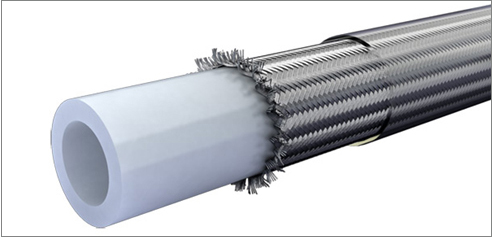
Most elastomer linings are selected for one narrow duty and then asked to cover several lines. A teflon hose built on a PTFE tube and an external stainless braid gives a plant real headroom, carrying aggressive media across a wide temperature band without the lining softening, swelling or breaking down. That headroom keeps a transfer line predictable over the long run.
Where Transfer Lines Are Pushed Hardest
Sites with Mixed Chemicals and Shifting Temperatures: Dependable hose performance matters most in plants where the medium changes between batches and the temperature never settles in one band. Chemical processing, pharmaceutical production, dye and pigment work, bulk loading and solvent recovery all run lines that see acids one week and hot cleaning cycles the next, often with little warning.
How Borrowed Margin Runs Out: A lining that is only just suitable ages faster than the inspection schedule assumes, and the first sign is often a stain or a soft patch near a fitting. Across routine plant inspections, engineers regularly come across rubber lined hoses replaced twice in a year beside fluoropolymer lines still in service.
What the PTFE Tube and Stainless Braid Each Do
The Inner Tube Handles the Chemistry: A PTFE tube resists almost every industrial chemical because the fluoropolymer structure leaves very little for an acid, solvent or oxidiser to attack. The bore also stays slick, so the product moves cleanly and residue has less to cling to, which is why a teflon hose suits lines that switch between different media.
The External Braid Carries the Load: An externally braided SS 304 cover takes the pressure and handling load so the inner tube can be chosen purely for chemical duty. Austenitic stainless steel braid holds its strength across a wide temperature span and resists the corrosion that would weaken a carbon steel reinforcement in the same plant environment.
A Working Range from Minus 73 to 260 Degrees Celsius
Cold Transfer and Hot Cleaning on One Line: A specified range of minus 73 degrees Celsius to 260 degrees Celsius covers cryogenic duties at one end and steam cleaning at the other, so a single assembly can serve both. Lines that handle chilled solvents and then face a hot sterilisation cycle stay within rating instead of being swapped between stages.
Weathering, Ageing and Diffusion Held in Check: PTFE shows very low diffusion, so vapour passes through the wall at a negligible rate and the surrounding area stays free of slow chemical release. The material also resists weathering and ageing, which matters on outdoor loading bays where sunlight, ozone and humidity quietly degrade rubber compounds over a few seasons of exposure.
See also: Moto Goggles in Canada: How Lens Tint Changes What You See on the Trail
Fluoropolymer Lining Compared with Rubber and Metal Alternatives
Where Rubber Lining Still Makes Sense: Rubber lined hose costs less and flexes easily, which keeps it practical for water, air and mild chemical duties at moderate temperatures. It gives ground once the medium turns aggressive or the temperature climbs, and a teflon hose becomes the sensible replacement when one line must cover several different chemicals.
Where Rigid Metal Piping Falls Short: Fixed metal pipework handles chemicals and heat well, though it cannot absorb vibration, thermal movement or the small misalignments that appear between a pump, a tank and a loading point. A flexible lined assembly takes that movement, and the trade-off is a defined service life instead of a permanent installation.
Aggressive Transfer Duties from 3/16 Inch to 6 Inch
Sizing Matched to Flow and Route: Available diameters from 3/16 inch up to 6 inch let the same lining serve a small instrument line and a bulk tanker connection. Smaller bores suit sampling, dosing and analyser feeds, while larger bores carry loading duties where flow rate matters more than tight routing around congested plant areas and fixed equipment.
Service Life Planned Rather than Guessed: A hose rated well beyond its everyday duty gives inspection teams a predictable replacement window instead of a surprise. Building that assembly into a preventive maintenance schedule turns those changes into planned work, carried out during a shutdown rather than during a live transfer with product already on the floor.
Points Worth Confirming before a Line Goes In
A short specification review before purchase keeps the advantage the construction offers. The points below cover what to confirm before a teflon hose is fitted to a chemical line, whether the assembly replaces an existing run or forms part of a new installation that is being commissioned for the first time.
- Confirm the full chemical list the line will carry, including cleaning agents and flushing media.
- State the highest and lowest temperatures the assembly will see, not the usual running figure.
- Check that the braid material suits the external environment as well as the internal duty.
- Select bore size on required flow rate rather than on the size of the existing fitting.
- Record the intended bend radius early, since routing decides whether a length performs as rated.
Room to Work When Conditions Change
A transfer line built with the right lining and the right reinforcement gives a plant room to work when the process shifts. Every season a marginal hose stays in place, that room shrinks and the replacement happens on the process’s terms rather than yours. Send the chemical, temperature and pressure details of your line for a specification review before the next changeover.