ByJohn A
Floor Drain Backing Up in the Basement? Causes and Next Steps
Picture the washer on its final rinse. Seconds later, gray water gurgles up out of the floor drain down in the basement. It stops. Somebody flushes a toilet upstairs, and it comes back, a bit worse than before. Where is it even coming from? Most people can’t really say at first, and honestly, the smell makes it all feel far more urgent than it may be.
Backups aren’t like most other water problems. Because this water is contaminated, cleanup follows stricter rules than a clean supply-line leak. People who look for restoration services after a backup usually want two answers quickly. What caused it? Can anyone safely use the basement right now?
With sewage, Restoration Logistics in Lafayette goes further than just drying things out, and there is a reason for that. Contaminated water means sanitizing, plus pulling out any porous material it reached. Carpet and pad from a sewage backup rarely stay.
Who Owns the Sewer Service Line Under Your Yard
Most homeowners assume the city handles anything connected to the sewer. That is only partly true. Many Colorado utilities, including Fort Collins Utilities, make the property owner responsible for the sewer service line that runs from the house to the main in the street, along with any damage a blockage in that line causes. Rules differ by city and district, so check with your utility before a problem starts.
There is also a simple way to guess where the blockage sits. A city guide from West St. Paul, Minnesota explains that a backup that happens only when water runs in your house usually points to your own line. A backup with no fixtures running points more toward the main. A backwater valve is another option homeowners add. It’s a one-way valve. Wastewater can leave the house, but the flap shuts if sewage starts moving back. A licensed plumber can say whether one fits your system.
Here is what usually causes the trouble.
See also: The Future of Artificial Intelligence in Everyday Life
What Usually Causes a Sewer Line Backup
Most backups start with something that builds up slowly inside the pipe. A few of the usual sources:
- Roots from trees working into the cracked joints of older pipe
- Grease and cooking oil rinsed down the kitchen sink
- Wipes, even ones labeled flushable, that still hold together in the pipe
- A sag or break in the line that holds debris
- Heavy use of the system while a partial clog is already there
Grease is the one people underestimate, perhaps because it goes down the drain as a warm liquid. It cools and hardens further along the pipe. Older streets with established trees growing near the line tend to see more root problems.
Staying Safe and Healthy During Sewage Cleanup
Bacteria and other germs travel with sewage, so a mop and a bucket of soapy water won’t cut it. Keep kids and pets well away from it. Don’t let the water touch any bare skin. Has it reached an outlet or the furnace? Only shut off power to that area if you can get to the panel without stepping in the water.
Here’s what professional sewage cleanup covers:
- Stopping the backup with help from a plumber or the utility
- Extracting contaminated water from floors and drains
- Removing porous materials such as carpet and lower drywall that the water soaked
- Hard surfaces get scrubbed and treated with antimicrobial
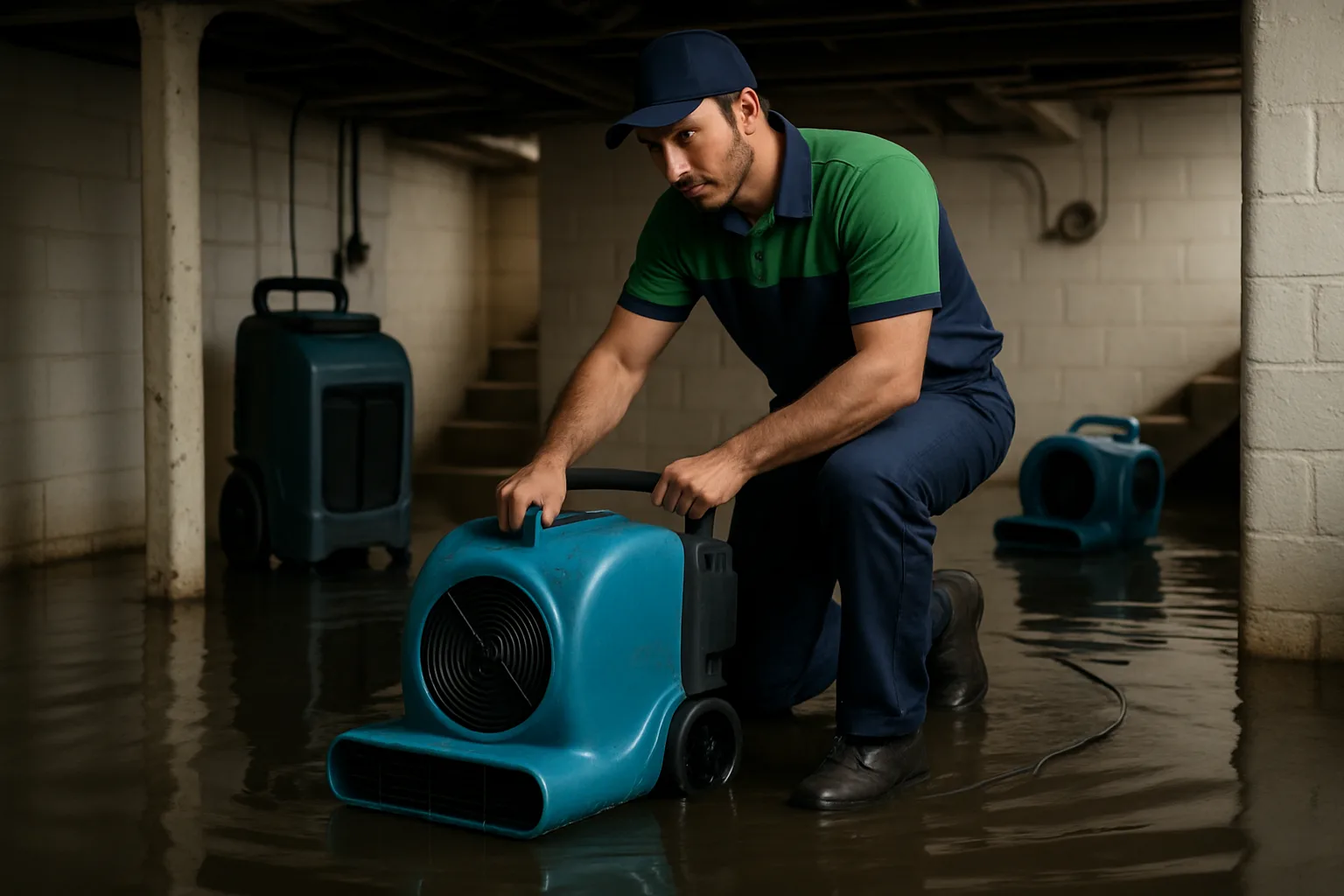
- Dehumidifiers and air movers running until the moisture readings come back to normal
Can a hard floor be saved afterward? People ask that one often. It depends on the material and how long the water sat. Sealed tile often cleans up well. Laminate usually doesn’t, since it’s a wood-based core under a thin plastic wear layer.
Does Insurance Cover a Sewer Backup?
Insurance is its own conversation. Many homeowners policies exclude sewer backup damage unless you add coverage, according to guidance from a Colorado water and sanitation district. That endorsement is often inexpensive, though it is easy to skip when you first buy a policy. It may be worth asking your agent about it this week, before you need it. Ask how the policy defines a backup too, since the wording varies from company to company.
Photos help either way. Before any cleanup starts, photograph the drain plus anything that got damaged.
Nobody enjoys a sewer backup, not even a little. Even so, a basement usually comes back fine once the source is fixed and the space is cleaned and dried the right way. What’s harder, maybe, is choosing between tree roots and a backwater valve so that same drain doesn’t catch you off guard again.